The name and where it came from
Why a dhow?
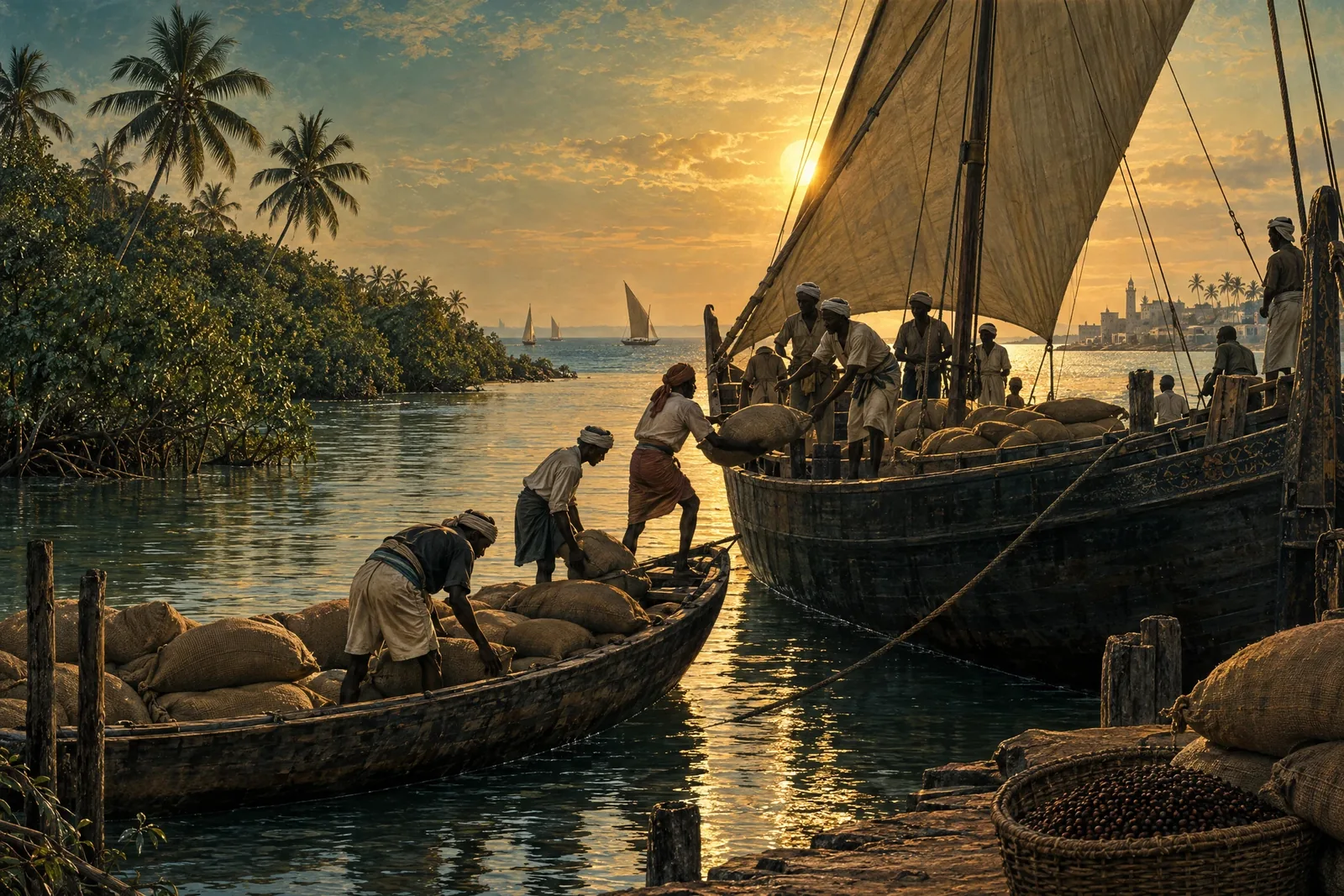
Because before the railway, before the road, and long before a café in Bournemouth, Malawian coffee reached the sea in sacks carried by people and loaded onto sailing boats.
Five generations
A family that arrived in 1925.
The Gaffars came to Malawi from India around 1925, five generations ago. They settled among people who grew coffee, and coffee has been part of the family’s landscape ever since.
This is not an academic history. It is what a family knows: the names of the men who owned the boats, the weight of the sacks, the distance to the river, and the photographs kept and handed on. Some of it may be myth. A good myth has its own kind of truth.
1870
The family’s account of how coffee came.
As the family tells it, coffee arrived in Malawi from Edinburgh in 1870, and by the late 1880s it was being shipped out to the British Empire. The story is told the way such stories are told — without footnotes, and with the confidence of people who have heard it all their lives.
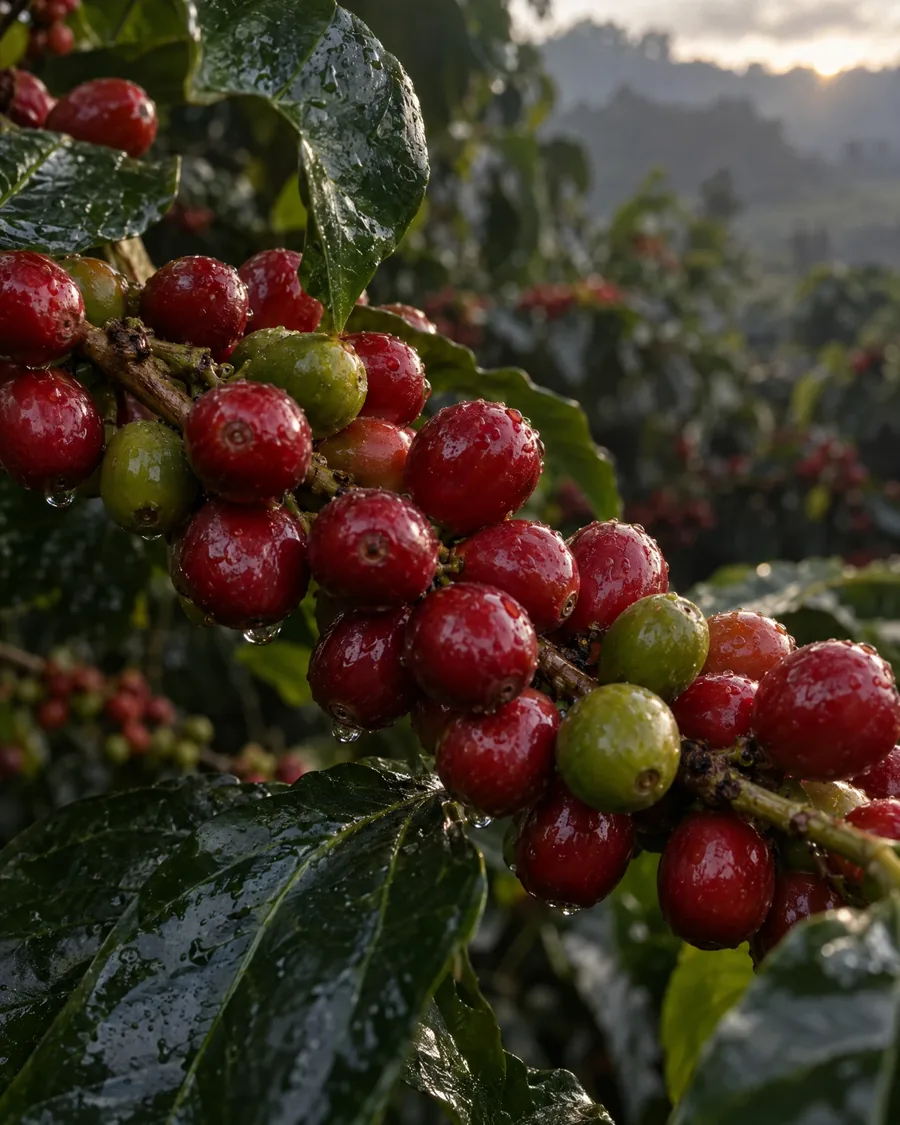
Historians may put the date a little later. The family does not mind. What matters is that a plant arrived from a Scottish university, took to the highlands, and made a crop that had to travel a very long way to be worth anything.
The documentary record is on our coffee page, with sources, because a good story and a good record can sit side by side.
The hard road
Twenty-five miles on foot. A hundred and eighty by river.
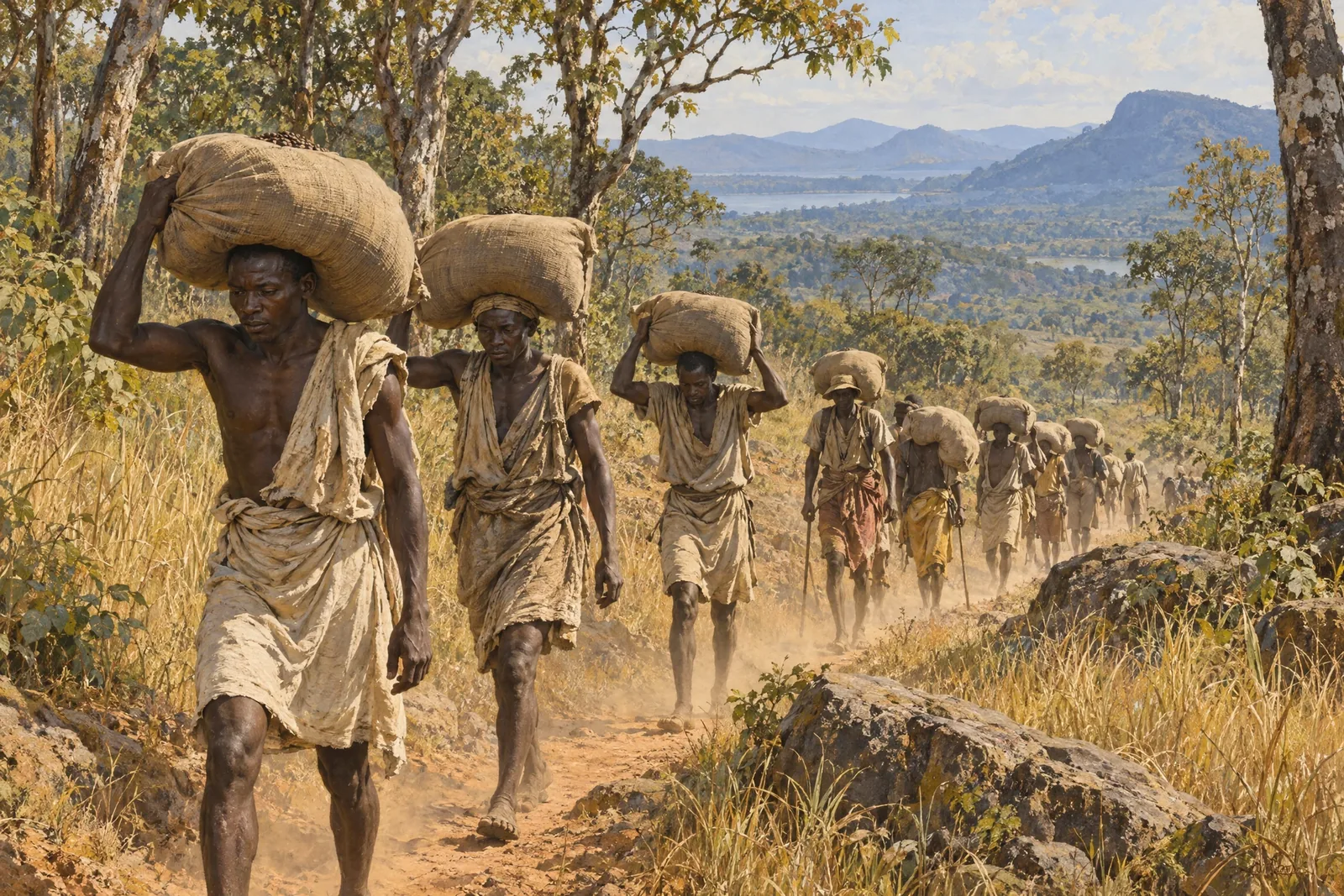
For the first decades of the export trade, the journey was brutal. Porters carried sacks of around forty pounds for some twenty-five miles to the river. Shallow boats took them about a hundred and eighty miles downstream. At the coast, the cargo was loaded onto dhows for the last leg to the wider world.
Nothing about that journey was abstract. It was weight, distance, weather and muscle, repeated sack by sack, season after season. The coffee in a Maravi cup has a longer history of effort behind it than most people drinking it will ever know.
The dhow
Sean Sumlii’s boat.
The family was shown photographs of a dhow called Sumlii. It was said to belong to Sean Sumlii, a close friend of their great-grandfather Adam Gaffar.
Malawi has never registered its boats, so there is no register to consult and no certificate to frame. There are photographs, a name, and a family memory of a friendship. That is enough to name a company after.
SUMLII carries the name forward: the same coast, the same cargo, a different century.
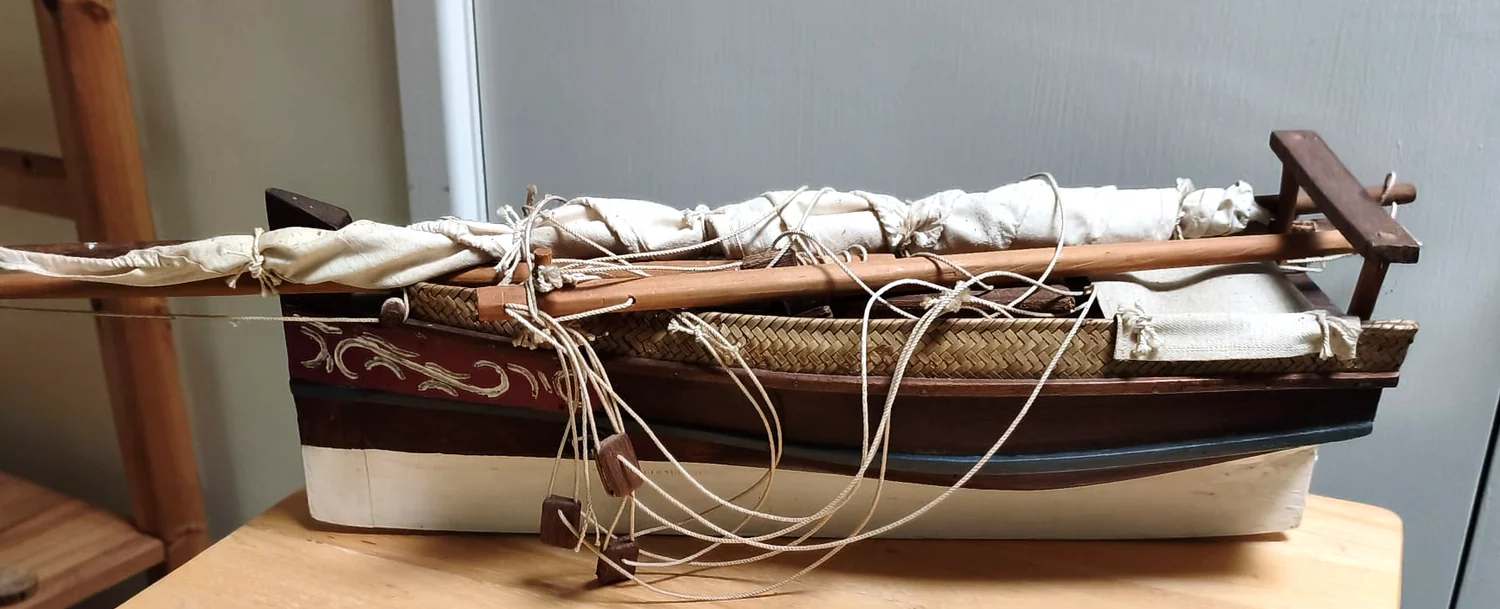
What does survive is a model of her, built by hand and given to Adam Gaffar by Sean Sumlii himself. It sits on a shelf in Spain now, sails furled, looking faintly sorry for herself. It is not evidence of anything — a model proves a friendship, not a ship — but it is the closest thing to Sumlii that the family has.
“What better than to use that same Sumlii dhow to carry the Maravi concept, its cafés and coffee roasteries, to yet more countries — starting with Spain.”
The family’s account
Today
The cargo is a café, the purpose is the same.
SUMLII’s job now is business rather than boats: to research a country, understand how hospitality works there, find the right local partners, and build a first site that proves the model.
The Maravi way travels with it — the coffee, the roasting, the room, the welcome. What changes is the accent: a terrace in Andalusia, a Spanish name above the door, a later evening and a local rhythm.
The name on the company is the name of a boat that carried coffee. It now carries a business.
The people behind it
Five generations, one family business.
See where SUMLII sits in the Gaffar family group, and how Maravi grew from Malawian cafés into five British ones.