01
Its own name
The Spanish shops are expected to carry local names, chosen for their town, rather than the Maravi name transplanted wholesale.
The next market
A café that belongs to its Spanish neighbourhood, with Maravi coffee and Maravi standards behind the counter.
Why Spain
Around Bournemouth and Christchurch, customers with holiday homes in Spain — or plans to retire or relocate there — kept asking whether a Maravi café might open near their other home.
Visitors from several European countries said the same. Spain came out of those conversations as the first country worth investigating properly: a large British and northern European population, a café culture that suits the product, and a market where a good local operator can thrive.
What follows from that is SUMLII’s job: testing the assumption with real sites, real costs and real partners.
The Spanish idea
01
The Spanish shops are expected to carry local names, chosen for their town, rather than the Maravi name transplanted wholesale.
02
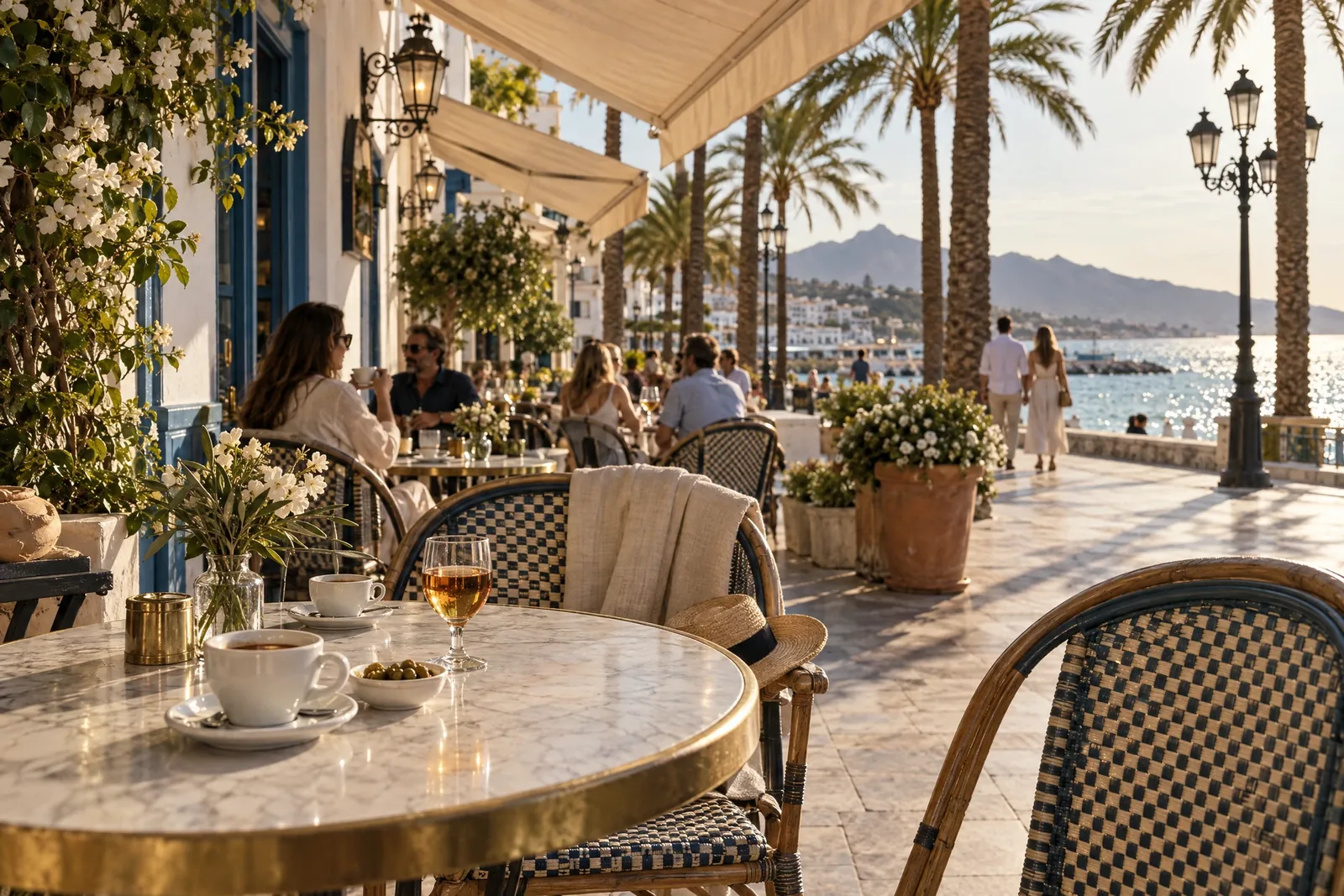
In Spain the terrace is the main room for much of the year. Awning, shade, marble tables and a long afternoon change the design.
03
Coffee at the centre, but food, hours and — where appropriate and licensed — a glass of sherry or wine belonging to the place.
Partners
The Spanish model is aimed at two kinds of partner: experienced hospitality operators who want a proven format, and people who want to own a café business in the country they have chosen to live in — with managers and staff running the day-to-day.
A café is a business, not a passive investment. It needs a site, capital, staff, licences and attention. SUMLII’s role is to make the format clear and the support real, so that a partner knows exactly what they are taking on before they commit.
The Spanish chapter
How the two Spanish companies are intended to work together.