Heritage · The old kingdom
Before Malawi, there was Maravi.
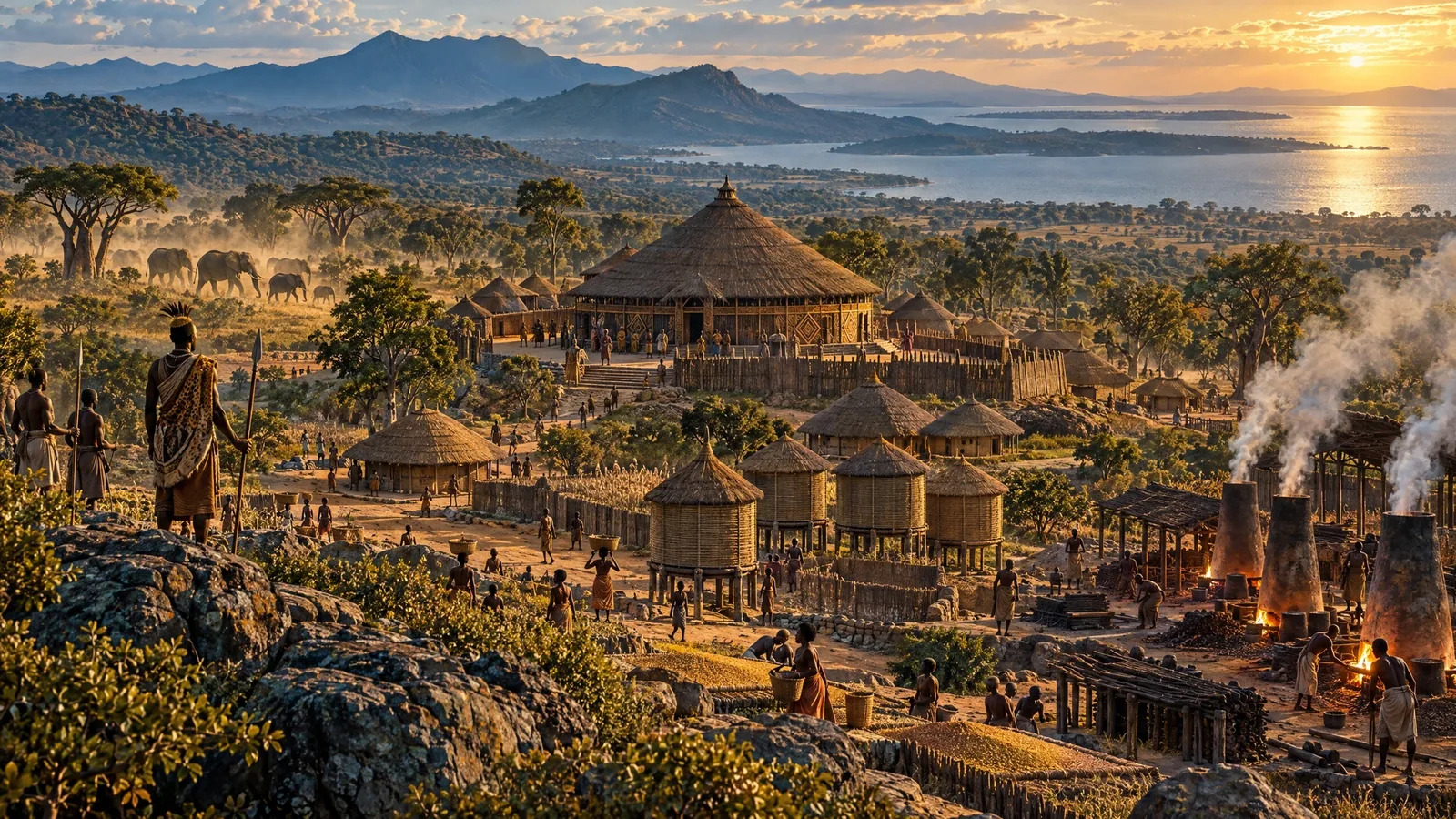
A confederation of chiefdoms that traded iron and ivory from the highlands to the Indian Ocean, and gave the region a name that has never quite gone away.
Origins
A kingdom said to begin around 1480.
The Maravi Kingdom is traditionally dated to about 1480, when the Phiri clan is said to have moved into the area west of Lake Malawi from the Luba–Lunda country of what is now the Democratic Republic of Congo. The story comes to us through oral tradition — most famously the Chewa history recorded by Samuel Ntara in the 1940s — and through Portuguese documents from the early seventeenth century.
Historians treat the founding date as approximate. The archaeologist Yusuf Juwayeyi, who excavated the Maravi capital at Mankhamba, notes that “1480” marks a tradition rather than a documented event. What is not in doubt is that by the sixteenth century a powerful political system was in place across the highlands of modern Malawi, eastern Zambia and northern Mozambique.
The people at its centre are known today as the Chewa. Their language, Chichewa, is one of Malawi’s two official languages.
How it worked
A king, a court and a great many chiefs.
At the head stood the kalonga — a title sometimes rendered karonga — whose capital moved over time. Beneath him were territorial chiefs and the mwini dziko, the “owners of the land”, who held authority over particular districts and their shrines.
Two figures gave the kingdom its spiritual architecture. The Nyangu, the king’s mother or sister, held a position of great ritual importance. The Makewana was the rain priestess at Msinja, whose ceremonies were attended by the kingdom’s leaders: drought was a political event, and rain-making a form of legitimacy.
It was not an empire in the European sense. Historians describe a confederation of chiefdoms, bound by tribute, kinship and ritual rather than by a standing army or a bureaucracy. Some parts were more loosely attached than others, which is exactly what allowed them to break away later.
The trade
Iron from the hills, ivory to the coast.
The kingdom’s wealth came from what the land and its people could make and carry. Iron was smelted in quantity — the excavations at Mankhamba produced evidence of large-scale ironworking — and iron hoes and weapons were traded widely. Ivory, cloth, salt and beeswax moved along the same routes.
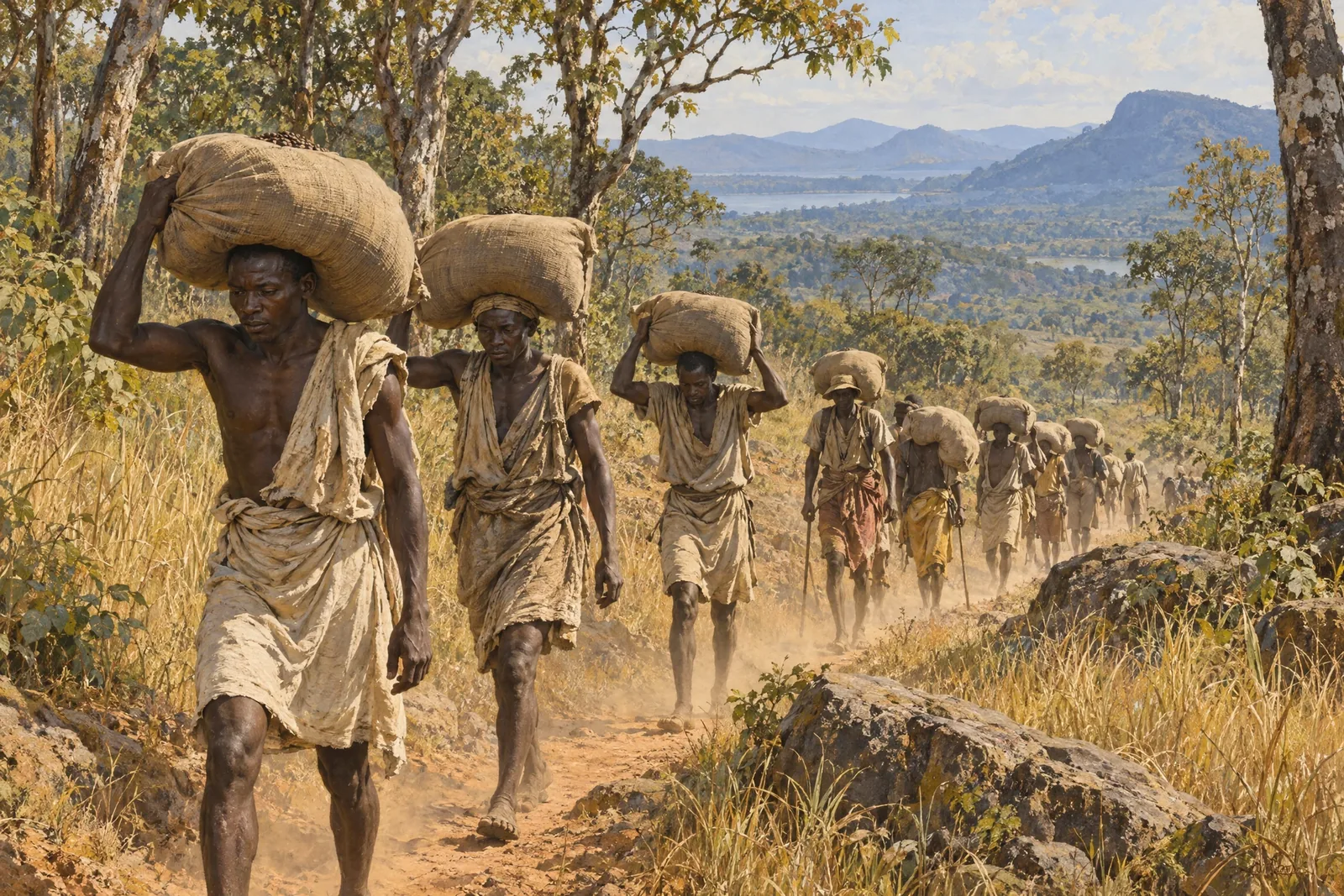
Those routes ran from the highlands down the Shire and Zambezi river systems to the Portuguese and Swahili trading posts at Quelimane and Mozambique Island, and from there into the Indian Ocean world. Maravi ivory and iron reached markets far beyond the region; imported cloth, beads and metal goods came back.
This is the economy that a dhow belonged to. Sailing vessels worked the coast and the great river mouths, and the goods of the interior reached them through a chain of carriers, canoes and shallow-draught boats.
Contacts and conflict
The Portuguese, Muzura and the limits of power.
Portuguese traders reached the region at the beginning of the seventeenth century. Documents from around 1608 describe a Maravi ruler called Muzura, who fought and negotiated with the Portuguese on the Zambezi and at one point seemed to threaten their position at Quelimane.
In 1622 Maravi forces defeated a rival chief, Lundu; a decade later, in 1632, the Portuguese suffered a reverse at Maravi hands. But the relationship was as much commercial as military: ivory and iron for cloth and trade goods, with Portuguese intermediaries and Swahili traders both taking a share.
The kingdom’s reach was real but not absolute. The Undi branch, to the west, and the Lundu branch, towards the lower Shire, increasingly acted on their own. By the early eighteenth century the centre could no longer hold them.
Decline and memory
Fragments, raids and a name that survived.
Through the eighteenth century the confederation broke into autonomous chiefdoms. In the nineteenth century the region was hit by Yao raids from around the lake, by the Ngoni invasions from the south, and by the intensifying slave trade that came with them. The last kalonga, Sosola, is said to have died in the late 1860s.
The kingdom ended. The name did not. “Malawi” is generally traced to “Maravi”, and the Chewa still hold the Kulamba ceremony each year in Zambia, attended by chiefs from Zambia, Malawi and Mozambique — a reminder of a political world that existed long before modern borders.
One popular explanation links Maravi to “flames” or fire, by way of iron smelting. It is an appealing story and it may be right, but the etymology is not settled among scholars. We tell it as tradition rather than fact.
Sources
Where this account comes from.
The history of the Maravi Kingdom rests on three kinds of evidence: oral tradition, Portuguese documents, and archaeology. They do not always agree, and where they disagree this page says so rather than choosing quietly.
The clearest scholarly disagreement concerns how the kingdom formed — whether by conquest, by migration, or by the gradual consolidation of existing communities — and how far Muzura’s power really extended.
Further reading
Citations are given so that readers can check the historians for themselves. The two journal articles are linked through a scholarly search rather than a publisher page, because publishers move their archives.
Next
From a kingdom to a colony and a country.
How the region became Nyasaland, won independence in 1964 and became a democracy in 1994.